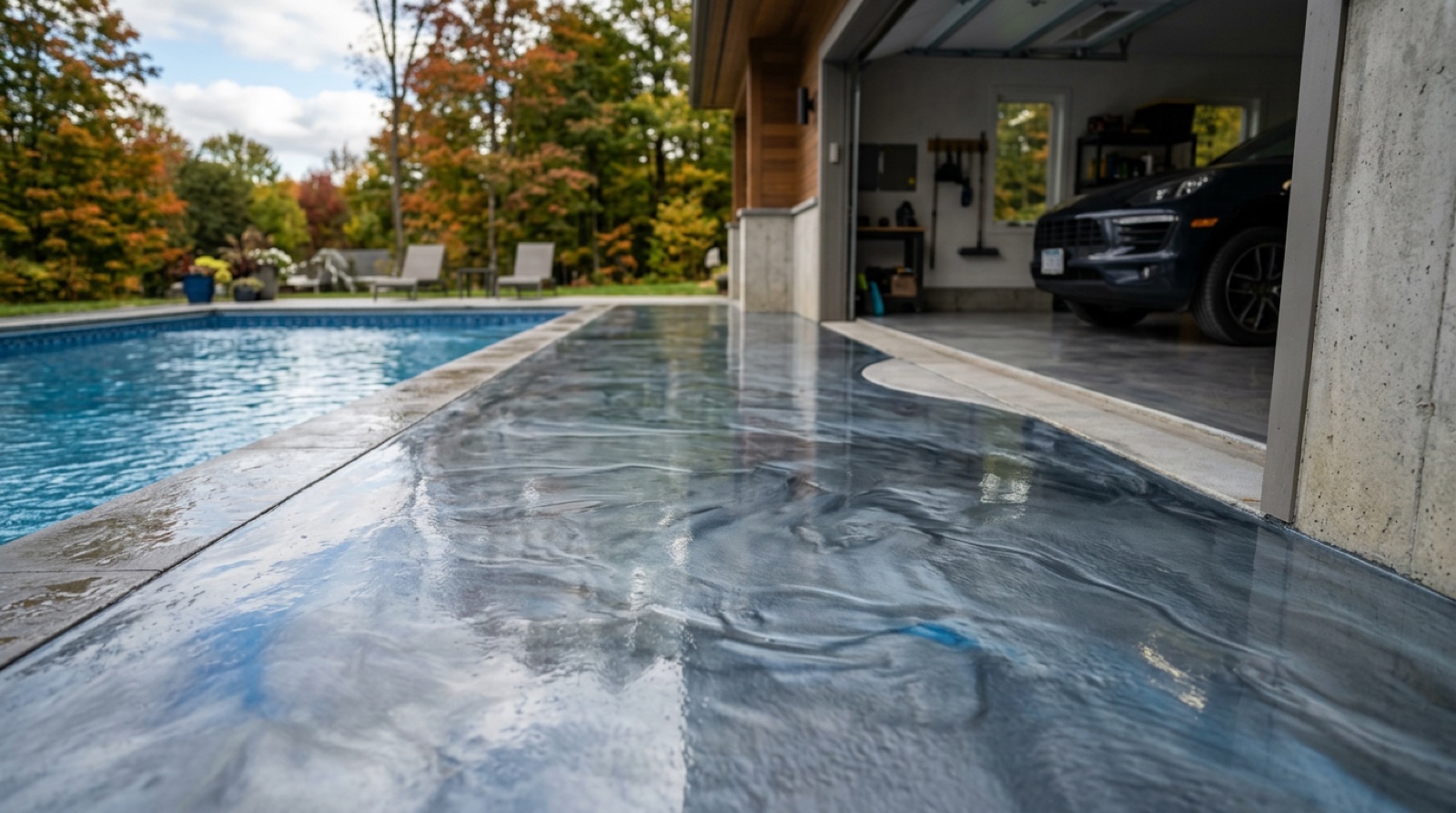
A pool deck in the Rochester NY area sees the most aggressive surface conditions of any residential exterior. Direct UV most of the year, chlorinated splash, winter road salt on the coast, foot traffic, and surface temperatures hot enough to burn bare feet by 11am. The system you spec has to survive all of it.
The Three Pool Deck Failure Modes
- UV degradation — yellowing, chalking, color shift
- Chemical etching — chlorine, pool acid, sunscreen, suntan oil
- Slip failure — wet feet on smooth coating cause falls (CDC: 800,000+ slip-and-fall hospitalizations annually)
Any pool-deck spec has to address all three. Most don't.
Polyaspartic Is the Only Chemistry
Acrylic sealers, water-based concrete stains, and pure epoxy all fail UV exposure in the Rochester NY area sun within 12-24 months. Polyaspartic is the only chemistry with a 15-plus year service life under direct UV. It's the same urethane-aliphatic resin used on highway bridge decks under industrial de-icing salt — pool chlorine is mild by comparison.
Cool-Coat Reflective Base
Light-color reflective base coats drop surface temperature 20-30°F vs bare concrete in direct sun and freeze-thaw conditions. Effective colors:
- Sand / cream
- Light gray
- Beige with light flake
Avoid: dark grays, navy, charcoal, anything black. They look great but get hot enough to blister bare feet by winter.
The cool-coat is paired with a clear polyaspartic top coat that preserves the reflective base color. Without the polyaspartic top, UV will ambers the cool coat and the cooling effect fades.
Anti-Slip Aggregate Options
Three aggregates give different traction profiles:
- Vinyl flake (full broadcast) — moderate texture, decorative, hides imperfections, DCOF ~0.55 wet
- Quartz broadcast — heavier texture, industrial look, DCOF ~0.70 wet
- Aluminum oxide grit (in top coat) — fine texture, less visible, DCOF ~0.65 wet
For most residential pool decks we recommend full vinyl flake with cool-coat base. For commercial or HOA pools we use quartz broadcast — more aggressive, meets ADA requirements with margin.
The Standard Rochester Pool Deck Spec
- Pressure wash and chemical degrease (remove sunscreen, oils, organic stains)
- Crack and joint repair with polyurea
- Polyaspartic UV-stable primer
- Polyaspartic cool-coat pigmented base (light color)
- Vinyl flake broadcast to refusal in your color blend
- Two coats polyaspartic UV-stable clear top with anti-slip aggregate
System lifespan: 15+ years before any re-coating needed. Lifetime warranty against peeling.
Cost
Rochester pool decks typically run $7-$12 per square foot installed. A 600 sq ft pool deck falls between $4,200 and $7,200. Crack and spalling repair on older decks adds $500-$1,500.
What to Avoid
- Stamped-concrete sealers — most are acrylic, fail in 2-3 years
- Pure epoxy — yellows in 6-12 months in the Rochester NY area sun
- Painted concrete — peels under chlorine and pool chlorine and de-icing chemicals
- Loose-laid pavers — different category, but if you're considering pavers, the cost is 2-3× polyaspartic for similar lifespan
Care & Maintenance
Polyaspartic pool decks are maintenance-light:
- Pressure wash 2-3× per year
- pH-neutral cleaner for organic stains
- No re-sealing, no waxing, no annual recoating
Pool chemicals (chlorine, acid, algaecide) splash harmlessly — wipe off when convenient. Sunscreen and tanning oil clean off with a soapy water rinse.
Timing the Install
Rochester pool deck installs go best in spring (March-May) and fall (October-November). Summer installs work but require very early starts (5am crew arrival) to avoid afternoon humidity and heat. Winter installs are fine for most lakeshore Monroe County towns; inland cities (Henrietta, Penfield) can have cold snaps that slow polyaspartic cure.
Get a Free Rochester Epoxy Quote
Call (585) 555-0100 or use the form below for a free written quote with mandatory moisture testing and lifetime warranty.